Steam Generator Repair in Pattaya
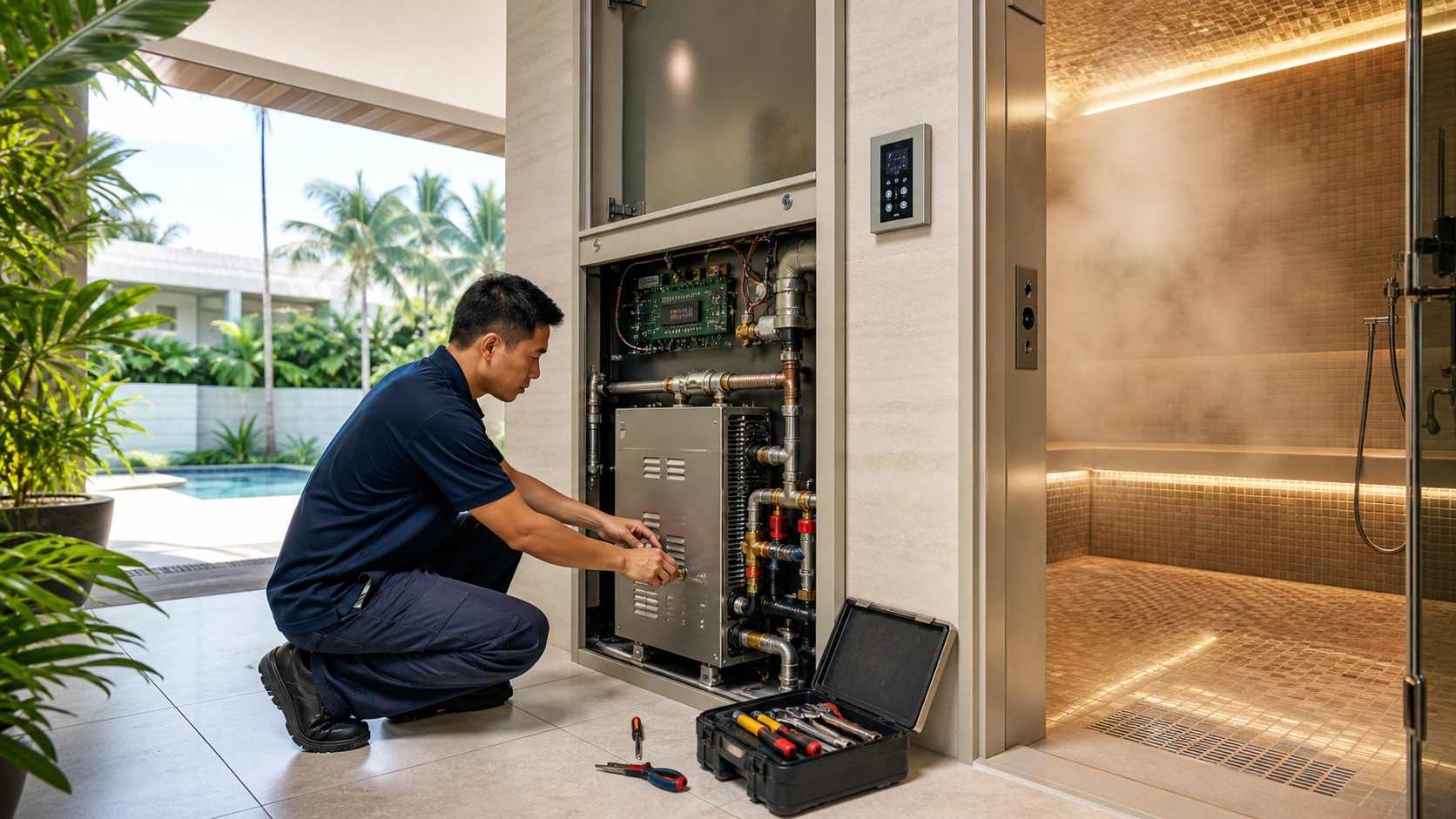
ServiceThai24 diagnoses steam generators and related steam-room equipment in Pattaya and nearby Chon Buri areas. We assess no-steam, weak-output, heating, water-fill, level-sensing, drainage, control and electrical faults in villas, condos, hotels and spa properties.
Send the generator model, rating-label photo, controller details, error code and photos of the water, steam and drain connections. The exact equipment and installation must be identified before repair or part replacement is confirmed.
Request steam generator diagnostics
Send your location, property type, generator and controller photos, rating labels, error code and a description of when the fault occurs. Include a short video of the control display or visible leak if it can be recorded without approaching hot steam or powered equipment.
Steam generator faults we assess
- the generator does not power on;
- the controls start but no steam is produced;
- steam output is weak, unstable or delayed;
- the unit does not fill or continues trying to fill;
- a water-level or temperature error appears;
- the drain or automatic flush does not operate correctly;
- water leaks from the unit or accessible connections;
- a breaker, RCD, RCBO or built-in protection device trips;
- there is overheating, a burning smell or an unusual sound;
- the room control, timer or start sequence does not respond.
How steam generator diagnostics are approached
Steam production depends on a sequence. The unit must receive the correct power and command, fill to the required level, confirm the level, energize the heating circuit, deliver steam through an open path and drain or flush according to its design.
Diagnosis follows the model and installed system. Checks may include power, protective devices, controls, inlet valve, level sensing, heater circuit, temperature inputs, steam outlet and drain, depending on access and safety.
Power supply and protective devices
Electric steam generators are high-load equipment and may use dedicated circuits, isolators, contactors and protective devices. A powered control display does not confirm that the heating circuit is receiving or switching the required supply.
If the fault belongs to the building circuit, panel, grounding, breaker or protective-device installation, that work is separated into the appropriate electrical scope.
Breaker or RCD tripping
Tripping can be associated with heater-element insulation failure, moisture in electrical areas, a damaged cable, overheated terminals, a control fault, an incorrect load condition or another circuit problem. The timing of the trip is important: at start, during fill, when heating begins or after the generator becomes hot.
Do not bypass the protective device or repeatedly reset it to keep the steam generator running. Do not open the generator or control panel while it is energized.
Water inlet and fill faults
No steam can result from no water supply, low available flow, a closed valve, restricted strainer, failed inlet valve, wiring fault or a control command that is not reaching the valve. External plumbing and the generator inlet are assessed as separate parts of the water path.
Valve replacement depends on the exact model, connection, electrical specification and supported part. An external pipe or supply fault is routed to Plumbing where appropriate.
Water-level probes and sensors
The control system must know whether the chamber has the required water level before heating. Depending on the design, this may involve level probes, sensors, wiring, chamber condition and control logic.
Contamination, scale, damaged wiring or a failed component can contribute to fill, no-heat or overfill symptoms. Sensors and safety circuits are tested according to the identifiable equipment and are not bypassed.
Heating elements and heating chamber
When the unit fills but does not produce steam, the fault may involve the heater supply, contactor, control output, one or more elements, element insulation or the heating chamber condition. Weak output can also occur when only part of the heating circuit operates.
Element repair or replacement requires model identification, measurements, safe access and confirmation of compatible parts. The chamber must be cool, isolated and depressurized according to the equipment procedure before it is opened.
Scale, water condition and maintenance history
Mineral deposits can affect level probes, heating surfaces, valves, drain passages and heat transfer. The condition depends on the water, operating cycles, flushing system and maintenance history.
Descaling method and chemicals are equipment-specific. An unsuitable chemical or procedure can damage the chamber, seals, elements or controls, so cleaning is not prescribed without identifying the model and condition.
Steam outlet and delivery path
A functioning generator can still give weak room output if the accessible steam outlet, line or nozzle is restricted, leaking, incorrectly routed or affected by condensate. Inspection depends on access and the temperature of the system.
Steam lines and outlets can cause severe burns. Do not disconnect, cover or probe the steam outlet while the unit is operating or hot.
Drain valve and automatic flush faults
Some generators use a manual drain, automatic drain valve or flushing sequence. A failed valve, restricted drain, control fault or unsuitable external drainage can leave water in the chamber or prevent the expected maintenance cycle.
The generator drain and the property drainage are assessed separately. Modification of external drain pipes or traps is additional plumbing work.
Leaks around the generator
Visible water may come from the inlet connection, valve, chamber seal, drain connection, pressure-relief component where fitted, steam connection or external plumbing. The source must be identified before a generator part is replaced.
Stop using equipment with an active leak near electrical components. Do not touch wet panels or energized connections. External pipe leaks can be routed to Water Leak Repair.
Controls, temperature sensing and error codes
Steam-room systems may include a room controller, temperature sensor, timer, remote start input, external contactor and generator control board. An error code can point to a sequence or sensor condition but does not always identify the failed part by itself.
Controller compatibility, sensor type, wiring and settings are model-specific. A similar-looking panel is not automatically a suitable replacement.
Room conditions and weak steam
Weak steam in the room is not always a generator fault. The result can be affected by generator capacity, room volume, surfaces, door sealing, warm-up time, ventilation, steam-line route and condensate management.
The equipment fault is separated from room construction and ventilation limitations. Structural work, door repair or ventilation changes are not included automatically.
Repair or replacement assessment
Repair may be suitable when the failed component is accessible, the generator condition is serviceable and a compatible part can be identified. Replacement may be considered when the chamber, controls and heating system have multiple faults, parts are unavailable or the unit is unsuitable for the room and installation.
A replacement generator must be assessed against the room, electrical load, water supply, steam route, drain, controller, sensors, clearances and service access.
Villas, hotels and spa properties
Private properties may require coordination with building access and distribution panels. Hotels and spas may need planned downtime, staff contact, maintenance records and work scheduled around operating areas.
Frequent use, previous descaling, recent repairs and recurring error history should be reported before the visit.
Steam-room controls and automation
Selected systems may support scheduling, monitoring or external start through manufacturer interfaces or approved control inputs. Compatibility must be confirmed from the exact generator and controller documentation.
Automation must not bypass water-level protection, temperature limits, local controls, protective devices or other manufacturer safety functions. Planned integration is separate from fault repair.
Information to send before the visit
- property location and type;
- generator, controller and sensor photos;
- manufacturer, model and rating-label photos;
- error code and the point in the sequence where it appears;
- whether the unit fills, heats, produces steam and drains;
- when a breaker or protective device trips, if applicable;
- photos of visible water, scale, damaged parts or previous repairs;
- accessible water inlet, steam outlet and drain connections;
- maintenance, descaling and operating history;
- room size, access restrictions and available documentation.
How the service works
- We review the model, control, symptom, sequence, property type and access.
- The electrical, water, steam and drainage arrangement is identified.
- Relevant supply, fill, level, heating, control, outlet and drain checks are performed.
- The observed fault, system limitation and repair-versus-replacement options are explained.
- Approved work is completed where safety, access, compatibility, tools and parts allow.
- Operation is checked and any plumbing, electrical, room or follow-up requirements are reported.
Safety and urgent faults
- stop using the generator if there is smoke, a burning smell, severe overheating or water near electrical parts;
- do not repeatedly reset a breaker, RCD, RCBO or built-in protection device;
- do not bypass level sensors, temperature limits, valves or protective controls;
- do not open a hot generator, disconnect a steam line or touch the steam outlet;
- do not add descaling chemicals without the identified equipment procedure.
For immediate electrical danger or an active external water leak, isolate the equipment only if it is safe and request the appropriate emergency service.
Service area
Steam generator diagnostics and repair are available in Pattaya, Jomtien, Pratumnak, Naklua, Wongamat, Bang Lamung and nearby Chon Buri areas. Send the generator details and location to confirm the appropriate scope.
Related steam, engineering, plumbing and electrical services
- Engineering systems diagnostics
- Electric sauna repair
- Jacuzzi systems repair
- Ventilation and exhaust fan repair
- Electrical repair
- Electrical installation
- Grounding inspection and repair
- RCD and RCBO service
- Power outage and breaker diagnostics
- Plumbing services
- Water leak repair
- Sauna and steam-room automation