Water Leak Repair in Pattaya
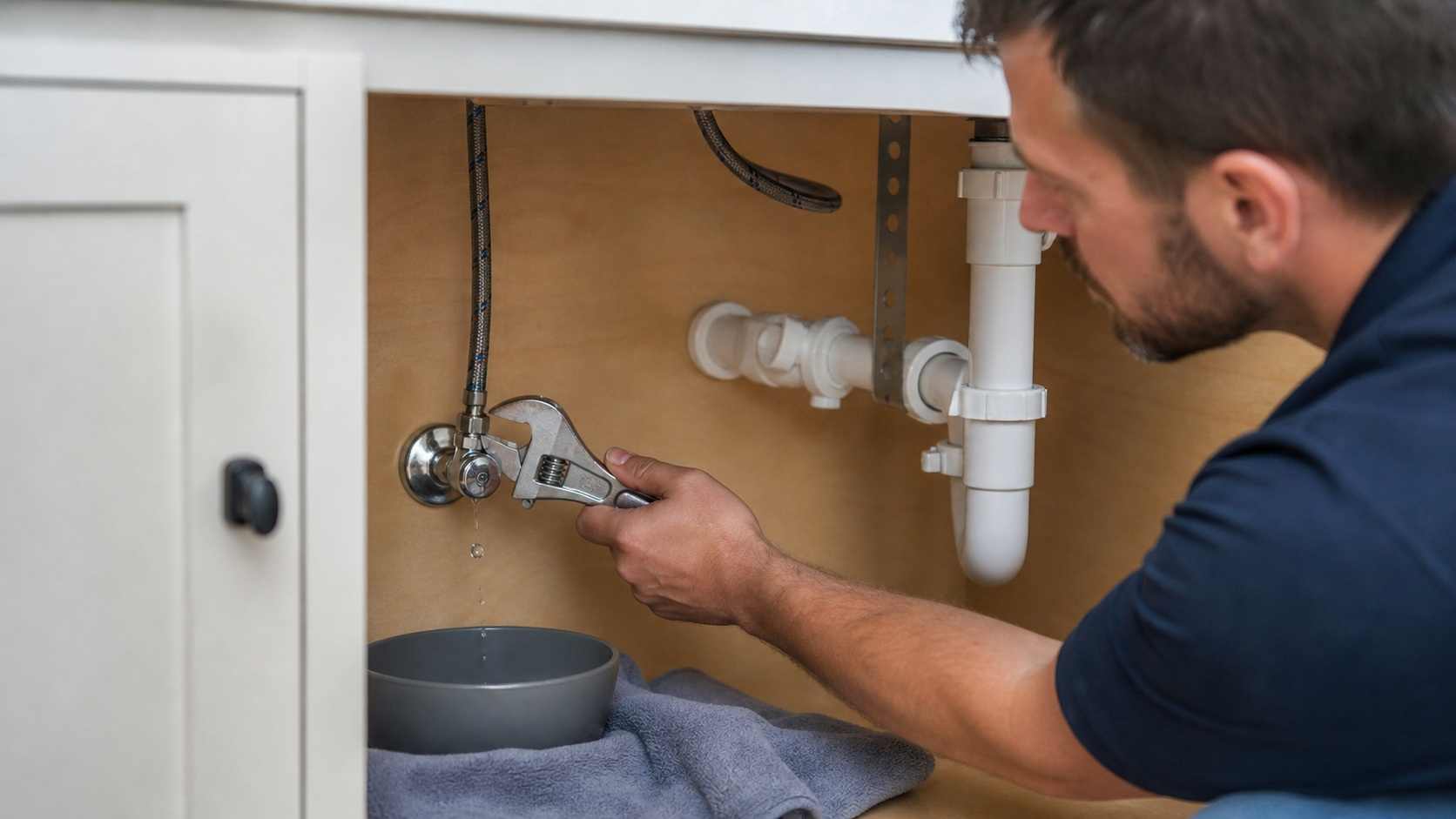
ServiceThai24 provides water leak inspection and repair in Pattaya and nearby Chon Buri areas. We help with leaking pipes, fittings, flexible hoses, traps, valves and plumbing fixtures in condos, houses, villas and commercial properties.
The technician checks the visible symptoms, affected fixtures, accessible connections and likely water source before recommending repair. If the leak is concealed or access requires opening a finished surface, the limitation and next step are explained before additional work is agreed.
Request water leak repair
Send your location, photos or a short video of the leak and the surrounding area, and describe when the water appears. Tell us whether the leak is active, whether a shut-off valve works and whether water is near electrical equipment.
Water leaks we inspect
- water dripping or spraying from an accessible pipe or fitting;
- a flexible hose, valve or appliance connection leaking;
- water under a kitchen sink, basin or cabinet;
- a trap or waste connection leaking during drainage;
- water appearing around a toilet, faucet, pump or water heater;
- a damp mark on a wall, ceiling, floor or finished surface;
- a leak that appears only when a fixture or appliance is used;
- a repaired connection that has started leaking again.
How the source of a leak is assessed
The location where water becomes visible is not always the point where it starts. Water can travel along a pipe, wall, floor, cabinet or ceiling before appearing. The technician reviews when the leak occurs and checks nearby water supplies, drains, valves, fittings and fixtures that can be accessed safely.
Useful clues include whether water appears continuously, only after opening a tap, during drainage, after flushing a toilet, when a pump runs or when an appliance operates. These patterns help separate a supply leak from a drain, fixture or equipment problem.
If the source remains concealed, further access or a different diagnostic scope may be required. The page does not promise non-invasive detection of every hidden leak.
Leaks under sinks and basins
Water under a sink may come from the faucet body, supply hoses, stop valves, drain fitting, trap, seals or downstream waste connection. The source is checked while the relevant fixture is used, where this can be done without increasing damage.
A repair may involve a seal, hose, trap, valve, fitting or damaged pipe section. Parts are selected after the connection type, size, condition and access are confirmed; availability is not assumed from a photo alone.
Pipe, fitting and flexible hose leaks
Pipe and fitting leaks can result from deterioration, movement, corrosion, poor support, a damaged thread, failed sealing material or excessive stress at a connection. Flexible hoses can leak at the coupling, braid, inner tube or valve connection.
Simply tightening a connection is not always appropriate and can damage a fitting or fixture. The technician checks the connection and recommends tightening, resealing, replacing a component or repairing a pipe section according to its condition.
Bathroom, toilet and fixture leaks
Bathroom water may come from a toilet connection, cistern, mixer, shower hose, drain, seal, water heater connection or pipework. The timing and position of the water help identify which fixture requires testing.
A toilet that continuously runs into the bowl is normally a toilet mechanism fault, while water escaping at the base, supply hose or valve requires a different assessment. A leaking faucet or installed water heater may be routed to the corresponding repair service after the source is identified.
Damp walls, ceilings and concealed leaks
A damp mark can be caused by a water-supply leak, drain leak, bathroom waterproofing problem, rainwater, condensation or water coming from another property. The visible stain alone does not confirm which system is responsible.
Accessible plumbing and the pattern of moisture are checked first. If confirmation requires opening a wall or ceiling, access from another unit, waterproofing assessment or specialist investigation, this is explained before destructive access or additional work is considered.
Repair after the source is identified
The proposed repair depends on the failed component and access. It may include replacing a gasket, flexible hose, trap, valve, fitting or an accessible damaged pipe section, or correcting a connection that has failed.
Repair of a pump, water heater, toilet mechanism, faucet or concealed pipe may require a separate service scope. The technician explains what was found, what can be repaired at the current access point and whether additional parts or work are needed.
When urgent action is needed
- water is flowing continuously and cannot be controlled;
- a ceiling is swelling, sagging or releasing water;
- water is spreading toward sockets, wiring, appliances or an electrical panel;
- the leak is affecting a neighboring property or common area;
- a toilet, drain or wastewater line is overflowing;
- a valve, hose or pipe has burst.
For an active leak with immediate damage risk, contact the emergency plumber service and send the current situation. If water reaches electrical equipment, keep people away and do not touch wet switches, sockets, appliances or panels; an emergency electrician may also be required.
Safe steps before the visit
- place a container or absorbent material only if the area is safe to approach;
- move belongings away from water if this can be done without risk;
- close the local or main water valve only if it is accessible and you know it controls the leak;
- do not force a seized valve or dismantle a pressurized connection;
- keep away from water near electrical equipment;
- do not open walls, ceilings or concealed service areas without an agreed plan.
Information to send before the visit
- property location and whether it is a condo, house, villa or business;
- photos or video of the water and the surrounding fixtures;
- whether the leak is continuous or appears only during use;
- which tap, toilet, pump, heater or appliance was operating;
- whether a shut-off valve is accessible and whether it works;
- whether the water is clean supply water or wastewater;
- whether another unit, ceiling or common area is affected;
- details of previous repairs, access and condo management requirements.
How water leak repair works
- Send the location, photos or video and describe when the water appears.
- We review whether the request appears to be a controllable leak or an urgent situation.
- The technician checks accessible supplies, drains, valves, fittings and fixtures near the affected area.
- The likely source, access limitations and proposed repair are explained.
- After the agreed repair, the accessible connection or fixture is checked under relevant operating conditions.
Reducing the risk of another leak
After repair, deteriorated hoses, unsupported pipes, corroded fittings or other visible risk points can be noted. Where appropriate, a separate water leak protection system with sensors and automatic shut-off can be considered for areas where an unnoticed leak could cause significant damage.
Service area
We provide water leak repair in Pattaya and nearby Chon Buri areas, including Jomtien, Pratumnak, Central Pattaya, South Pattaya, North Pattaya, Naklua, Wongamat, East Pattaya and Na Jomtien.