RCD Installation and Testing in Pattaya
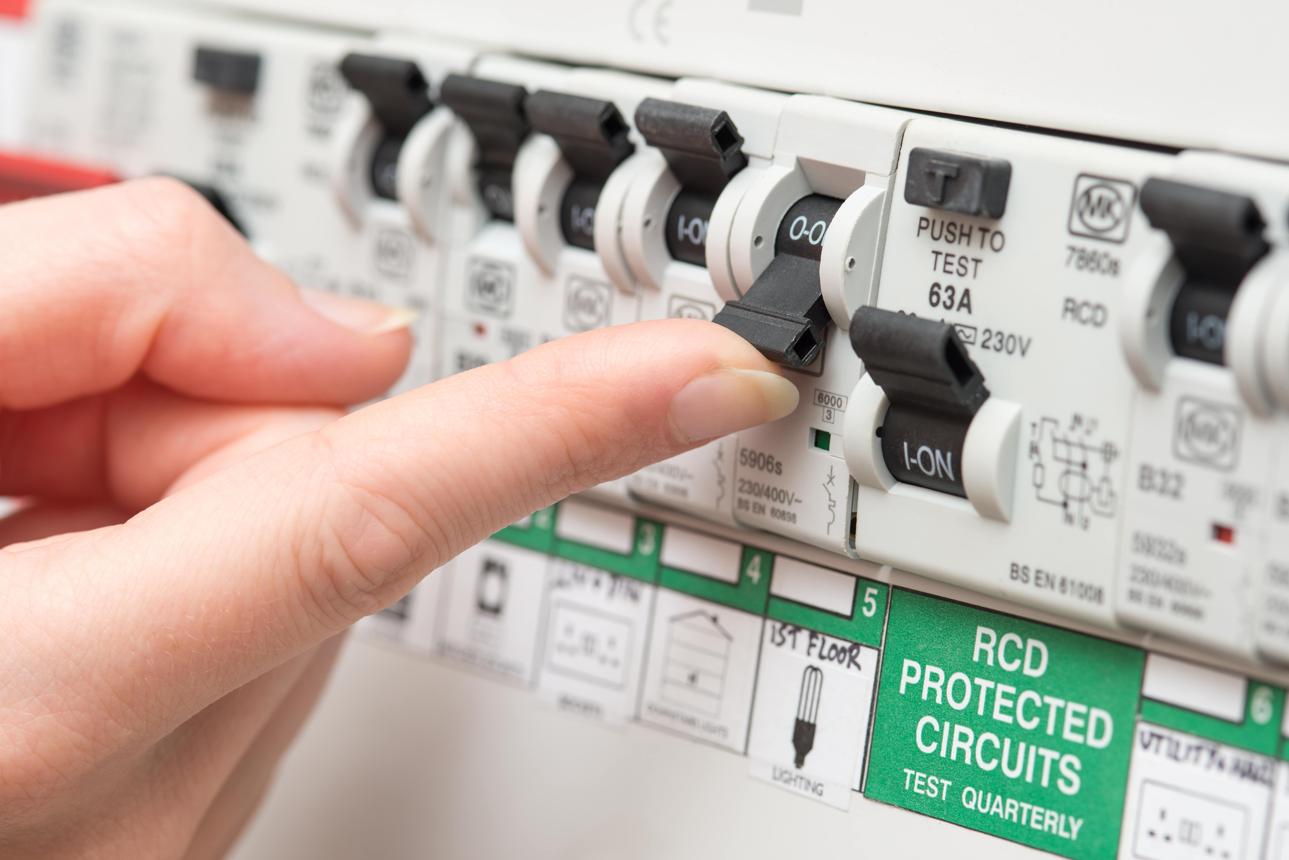
ServiceThai24 provides RCD installation, RCD testing and residual-current protection diagnostics in Pattaya and nearby Chon Buri areas for condos, houses, villas, offices, shops and other commercial properties.
We help when an RCD or safety switch trips repeatedly, does not reset, does not operate from the TEST button, or needs to be selected for a new circuit, water heater, EV charger or other equipment.
Request an RCD check
Send your location, describe when the device trips, and attach clear photos of the electrical panel, RCD markings and connected equipment. Do not remove the panel cover or touch exposed wiring.
When an RCD should be checked
- the RCD trips repeatedly or at unpredictable times;
- it trips when a water heater, pump, washing machine or other appliance is switched on;
- the TEST button does not switch off the protected circuit;
- the RCD does not reset or immediately trips again;
- you feel an electric shock or tingling from water, a faucet or equipment body;
- the electrical panel has been altered or new circuits have been added;
- a new water heater, EV charger, pump or high-load appliance is being installed;
- the device type, rating, protected circuits or previous test results are unknown.
What an RCD does
An RCD is a residual current device that monitors current flowing through the protected circuit and disconnects the supply when it detects residual current above its operating threshold.
An RCD can reduce risk from some electrical faults, but it does not detect every possible fault and should not be treated as a replacement for correct wiring, grounding, circuit protection or safe equipment.
RCD, circuit breaker and RCBO
- RCD or RCCB: residual-current protection; overcurrent protection may be provided by a separate circuit breaker.
- Circuit breaker: protection against overload and short circuit; it may not provide residual-current protection.
- RCBO: combines residual-current and overcurrent protection for the circuit.
The correct device cannot be selected from the word RCD alone. The panel, supply, number of poles, circuit load, connected equipment, required residual-current characteristics and manufacturer instructions must be checked.
What we inspect and test
- device manufacturer, markings, type, rated current and residual-current rating;
- which circuits and equipment are protected by the device;
- TEST button operation and mechanical reset;
- trip time and operating threshold using a suitable RCD test instrument where applicable;
- line and neutral connections in the protected circuit;
- signs of leakage, damaged insulation, shared or incorrectly connected neutrals;
- electrical panel condition, breaker coordination and available space;
- grounding and protective conductor condition as a separate part of electrical safety.
TEST button and instrument testing
The TEST button checks the internal tripping mechanism under the conditions provided by the device manufacturer. If the device does not trip from the button or cannot be reset, it should not be treated as reliable protection until it has been checked.
Instrument testing is a separate check. A suitable RCD tester can be used to assess operating current and tripping time. Testing requirements and acceptable results depend on the installed device, circuit and applicable electrical requirements.
Why an RCD keeps tripping
Repeated tripping can be caused by a faulty appliance, water or moisture, damaged insulation, cumulative leakage from several devices, incorrect neutral connections, wiring faults, unsuitable device selection or a defective RCD.
Do not bypass the RCD or repeatedly force it back on. Note which equipment or action causes the trip and send this information with photos. The cause should be identified before the device or wiring is replaced.
RCD installation or replacement
Before installation, we check the electrical panel, supply, circuit load, existing breakers, neutral arrangement, grounding and connected equipment. We then determine whether an RCD, RCCB, RCBO or another protection arrangement is appropriate for the circuit.
Device type, poles, rated current, residual-current characteristics and coordination with other protective devices are selected for the actual installation. We do not recommend one universal RCD for every property or appliance.
Water heaters, wet areas and electrical leakage
Water heaters, bathrooms, outdoor equipment, pumps and other equipment near water require careful assessment of wiring, grounding and residual-current protection.
If you feel an electric shock from a shower, faucet, water heater or metal equipment body, stop using the affected equipment. Do not touch wet electrical equipment or exposed wiring. Switch off the affected circuit only if it can be done safely.
RCD protection for EV chargers
EV charger protection must follow the instructions for the specific charger model. Some chargers include particular residual-current or DC leakage detection functions, while other installations require additional external protection.
Before commissioning, we check the charger documentation, circuit, breaker, RCD or RCBO arrangement, DC leakage protection requirements and grounding. An existing device should not be assumed suitable only because its rated current appears high enough.
How the RCD service works
- Send photos of the panel and describe when the device trips or why protection is needed.
- We identify the device, protected circuits and connected equipment.
- The panel, wiring, grounding, leakage symptoms and RCD operation are checked.
- We explain whether the cause is the device, circuit, appliance, wiring or protection arrangement.
- After agreed repair or replacement, the relevant protection and circuit operation are tested again.
Service area
We provide RCD installation and testing in Pattaya and nearby Chon Buri areas, including Jomtien, Pratumnak, Central Pattaya, South Pattaya, North Pattaya, Naklua, Wongamat, East Pattaya and Na Jomtien.